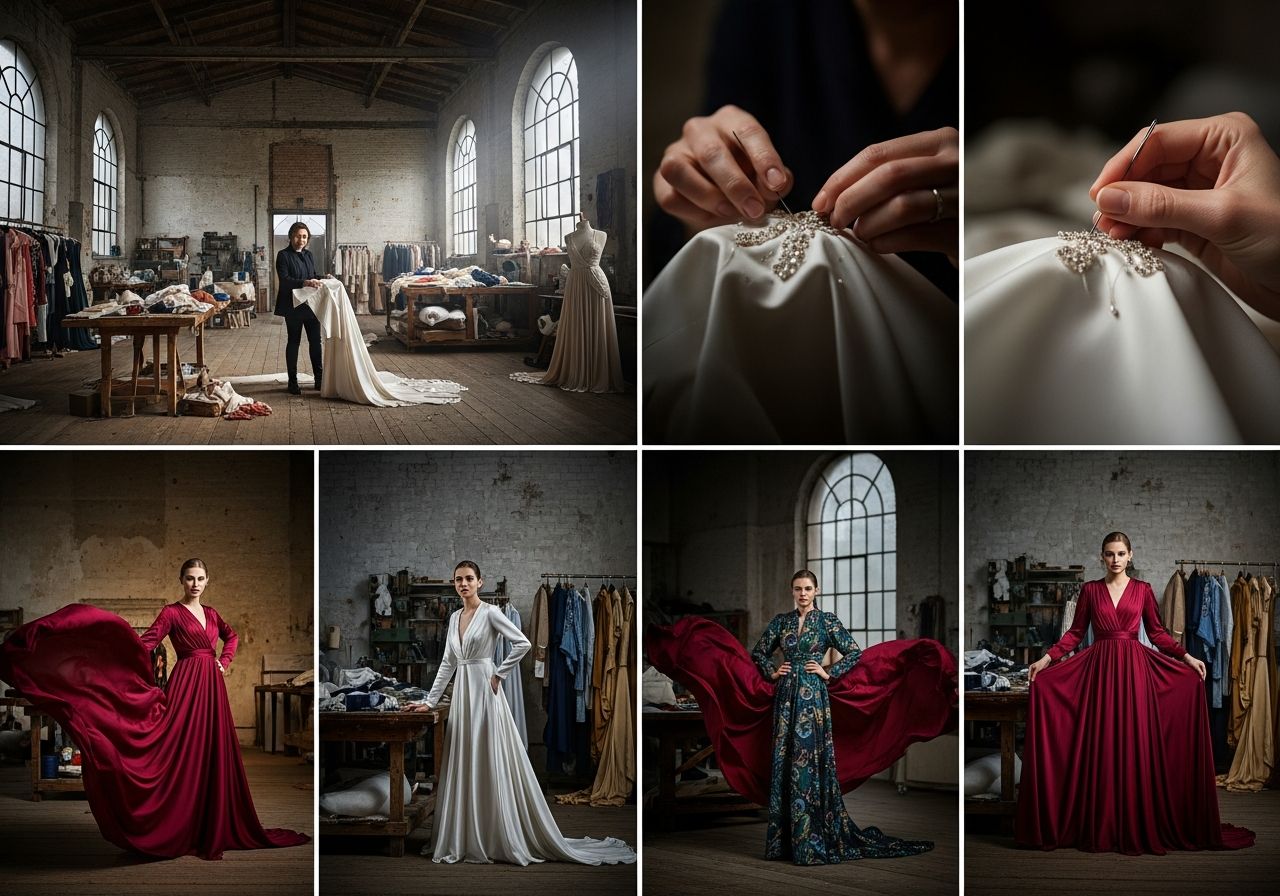
If the early 2020s were defined by a whisper, 2025 is defined by a roar.
As we navigate the Spring/Summer and Fall/Winter seasons, the fashion landscape is undergoing a tectonic shift. The beige, austere grip of “Quiet Luxury” has finally been broken, replaced by a sartorial epoch that demands to be seen, felt, and—crucially—traced. Across the runways of Paris and the drone-lit streetwear drops of London, a singular narrative is emerging: the modern wardrobe is no longer about stealth wealth. It is about radical authenticity, structural audacity, and a seamless alchemy of high-tech innovation and nostalgic yearning.
In a year marked by historic creative director shakeups, sweeping European sustainability laws, and the blurring of haute couture and sci-fi aesthetics, *Modern Vogue* synthesizes the ultimate report on **fashion trends 2025**. Here is the new world order of style.
—
### **The Aesthetics of Rebellion: Volume, Voice, and the Nouveau Tuxedo**
The minimalist restraint of yesterday has been subverted by what we are dubbing “Ethical Maximalism.” On the 2025 runways, designers traded pristine basics for asymmetrical embellishments, “dirty” fabric treatments, and a deeply individualistic pre-loved aesthetic, drawing heavily from curated **vintage fashion** and the eclectic **influencer styles** dominating our social feeds.
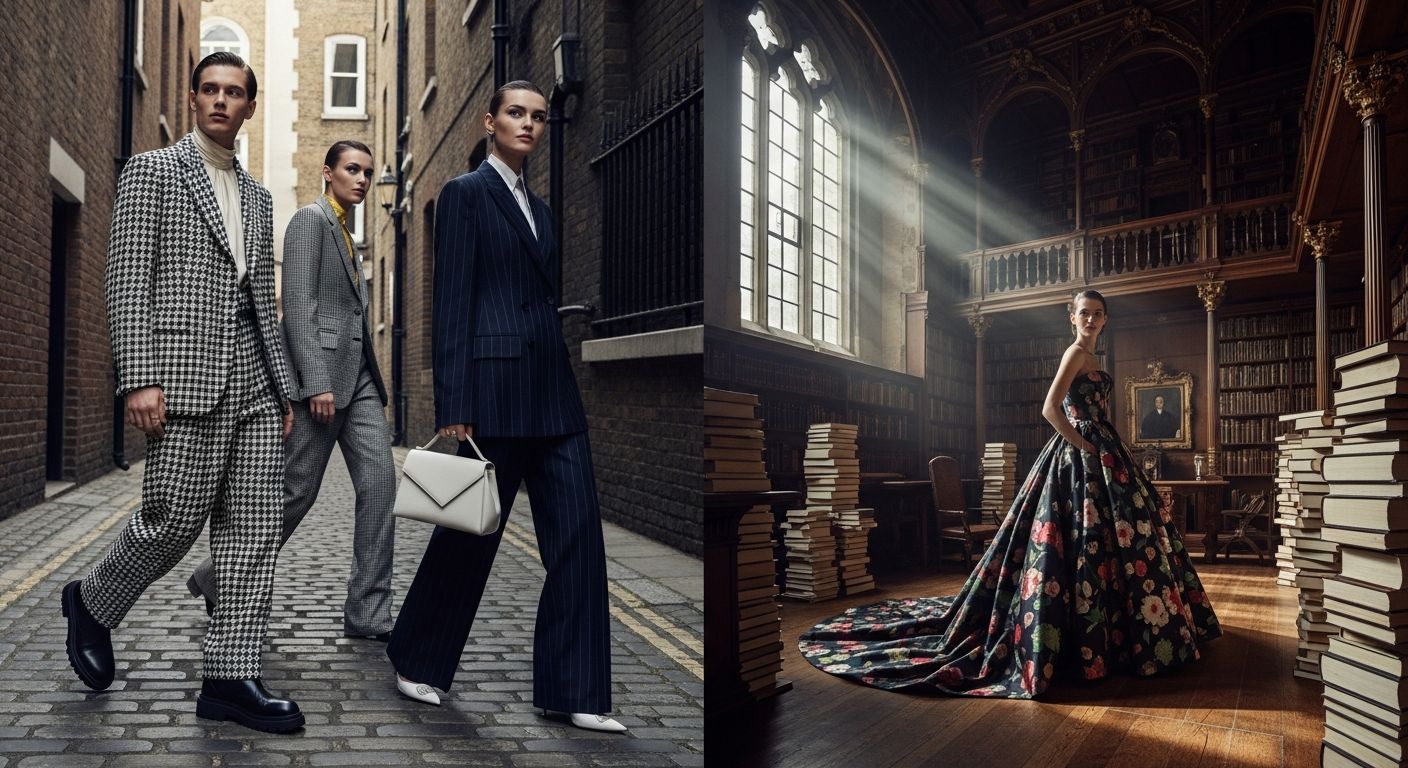
The undisputed champion of this new mood is the “Nouveau Tuxedo.” Heavyweight tailoring remains, but it has been fiercely deconstructed. We saw sliced tuxedo jackets at David Koma, while Givenchy and Haider Ackermann (whose debut at Tom Ford delivered a seductive, *American Psycho*-esque sharpness) championed nipped peplum blazers. Crucially, this high-fashion tailoring is bleeding into the $397 billion urban apparel market, establishing the defining silhouette for **streetwear 2025**. The boundary between couture and the pavement has dissolved; brands like Ami Paris are pioneering a tailoring-streetwear crossover, where structured blazers are paired effortlessly with oversized “Bermuda” utility shorts and chunky retro sneakers like Adidas Campus 00s.
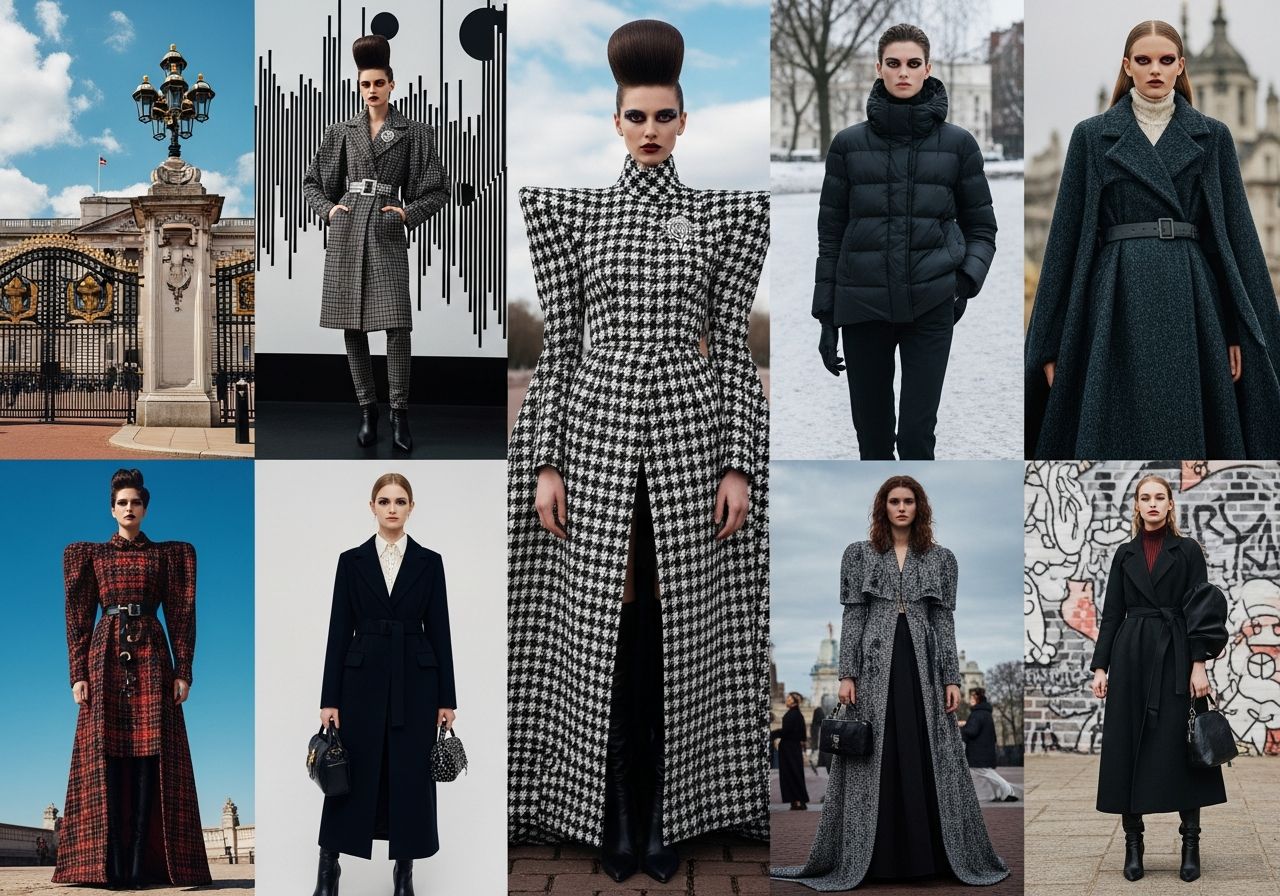
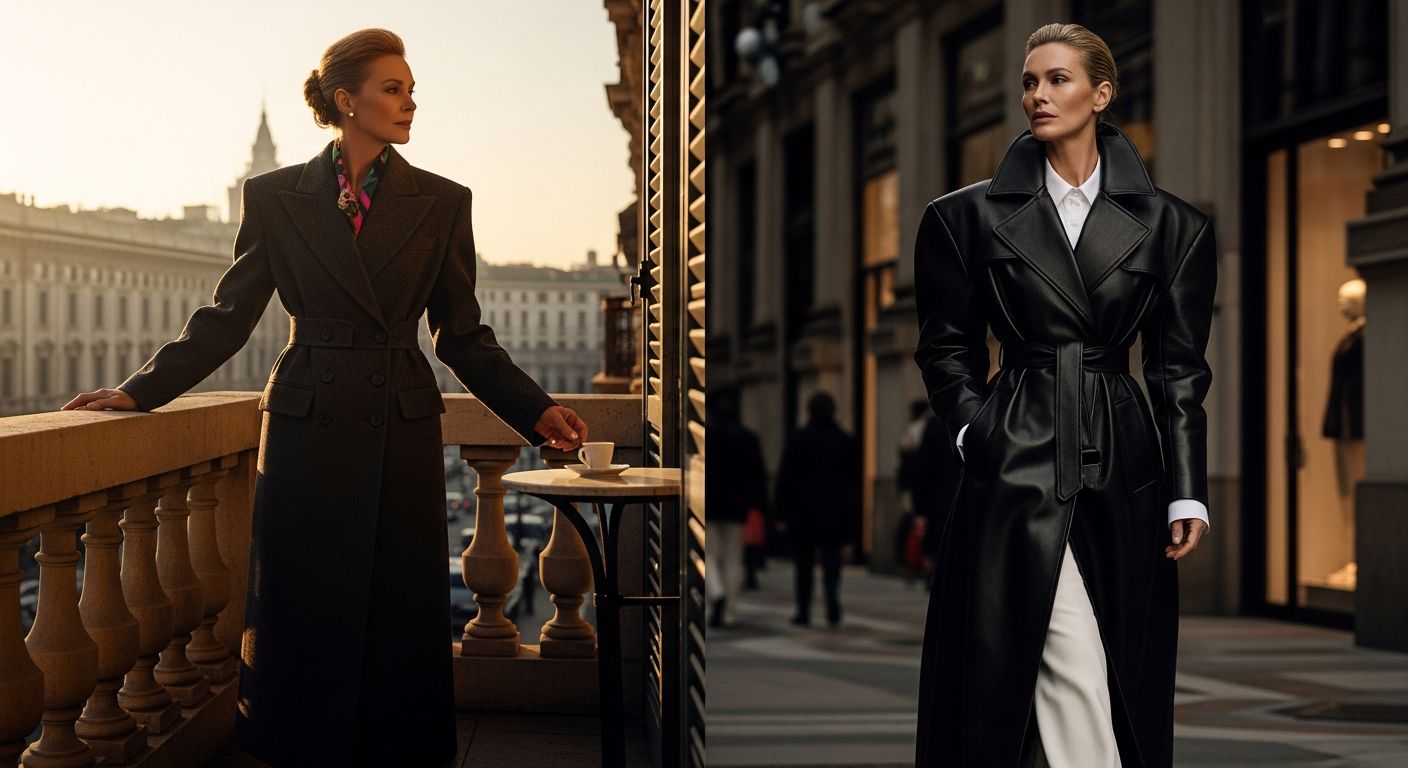
Color palettes, too, have shifted dramatically. SS25 delivered a “crayon box” explosion of intentional clashing—turquoise, chartreuse, and Yves Klein blue. As we move into Fall, the palette matures into “Moody Maroons”: deep oxblood, forest green, and espresso, largely manifesting in oversized leather bombers and cocoon silhouettes that nod heavily to surging Y2K nostalgia.
### **The Musical Chairs of Legacy Houses**
This year will be immortalized in fashion history for its seismic changing of the guard, fundamentally rewiring the DNA of legacy houses to meet a new, polarized consumer base.
Matthieu Blazy’s triumphant SS25 debut at Chanel injected a lustrous metallic restraint into the maison, while Jonathan Anderson transformed Dior with a whimsical, Monet-inspired spectacle around the Tuileries. Meanwhile, Pierpaolo Piccioli brought critically acclaimed balloon-hem volumes to Balenciaga.
But perhaps the most culturally disruptive move was Demna’s polarizing debut at Gucci. Bypassing traditional elites entirely, Demna catered to the underground, sending internet phenomena like Nettspend down the runway alongside Kate Moss. It was a masterclass in modern relevance, echoing the ethos of streetwear juggernauts like London’s Corteiz—brands proving that in 2025, community, secrecy, and cultural identity are the new ultimate currencies.
### **The Digitization of the Physical: Smart Bags, AI, and the DPP**
In 2025, technology is not just an accessory; it is woven into the very fabric of the industry. The most profound shift is the newly mandated EU Digital Product Passport (DPP). Every garment entering Europe now features a machine-readable ID (QR or RFID), tracking its lifecycle from raw material extraction to end-of-life recycling. Greenwashing is officially dead.
This transparency pairs with the explosive rise of Next-Gen materials that are rapidly advancing **sustainable fashion**. Textile-to-Textile (T2T) closed-loop recycling has reached commercial scale, making high-quality **eco-friendly clothing** the new standard rather than a niche exception. We are wearing MycoWorks’ mushroom leathers, Pangaia’s seaweed fibers, and lab-grown bio-cellulosics. Yet, as the 2024 closure of Mara Hoffman’s beloved label reminded the industry, sustainable independence is financially grueling—making these new macro-regulations a necessary lifeline for ethical brands.
Accessories are also experiencing a high-tech renaissance. Luxury handbags—returning to structured, architectural forms like kiss-lock barrels and “East-West” baguettes—now routinely feature NFC chips for authentication and RFID-blocking interiors. AI has become the industry’s primary catalyst, with 41% of consumers pivoting to Gen-AI search for fashion discovery. Yet, in a brilliant juxtaposition, this tech boom has sparked a counter-movement: the “Anti-Phone” accessory trend, where chic, tech-nostalgic summers are defined by vintage Kodak digital cameras and oversized woven “throw-everything-in” totes.
### **Heavy Metals: The Jewelry “Presence Without Noise”**
The fine jewelry market is mirroring the runway’s rejection of timidity. Whisper-thin chains have vanished, making way for substantial, sculptural gold. The mantra is “presence without noise.”
Consumers are layering mixed metals with abandon and seeking out antique “Old Mine” and elongated “East-West” diamond cuts that prioritize character over uniform symmetry. But beauty must meet utility. Driven by a pragmatic consumer mindset asking, *”Can I live with it?”*, low-profile bezel settings and flat-back earrings for 24/7 wear are dominating. Even the cocktail watch has returned, acting as high-jewelry armature for the modern wrist.
### **The Mid-Market Surge and the Experiential Era**
Macroeconomics are reshaping *how* we buy. With inflation driving up luxury prices, an exhausted consumer base is seeking refuge in the mid-market and the booming resale sector—driven aggressively by Gen Z’s passion for sourcing authentic **vintage fashion** to replicate viral **influencer styles**. Luxury houses are realizing that they can no longer simply sell products; they must sell experiences. According to CXG analysts, the industry has transitioned into an “experiential era,” where physical garments are bundled with concierge services and deep cultural storytelling.
—
### **Style Guide: Wardrobe Essentials and Fashion Trends**
For the modern wardrobe, the translation from runway to reality requires a mix of audacity and deep intention. Here is the *Modern Vogue* playbook for 2025 styling:
1. **Master the High-Low Alchemy:** The ultimate uniform of 2025 is the friction between soft and raw. Pair a structured, tailored blazer with a sci-fi militant cargo pant or oversized Bermuda shorts. Anchor the look with the footwear of the decade: a sustainable tech-runner or a bright retro sneaker.
2. **Creative Layering (The New Art Form):** With layering garnering tens of millions of views on TikTok, rules have evaporated. Wear a pleated, sheer boudoir dress over tailored trousers. Drape scarves as capes in the summer. It’s all about creating multidimensional depth.
3. **Proportion Play and the Balloon Rule:** Architectural volumes are back. If you invest in a bubble mini-skirt or a massive cocoon outerwear piece (preferably in espresso or oxblood leather), ground the look with a sleek, second-skin knit to balance the proportions.
4. **Embrace the “30-Wear” Economics:** Sustainability is a styling choice and the ultimate foundation of a modern **capsule wardrobe**. Before purchasing, scan the garment’s DPP to check its true material composition (prioritize Bamboo Lyocell and ECONYL; reject virgin polyester). Divide the price by the number of times you’ll wear it. If it doesn’t pass the “30-wear test” or seamlessly integrate with the rest of your **capsule wardrobe**, leave it on the rack.
5. **Curate, Don’t Coordinate:** In jewelry, throw out the matching sets. Stack yellow gold with oxidized silver, pair an antique-cut bezel ring with early-2000s slouchy belts, and finish the look with light blue-tinted indoor/outdoor aviators.
In 2025, fashion is asking more of us. It asks us to be responsible, to be tech-literate, and most importantly, to be unapologetically bold. The quiet era is over—it’s time to speak up.