# The Great Recalibration: Avant-Garde Silhouettes and the Future of Archive Fashion
**By Hannes, Senior Fashion Editor**
In the hallowed, often frantic halls of the global fashion capitals, the word “new” has undergone a radical, almost violent deconstruction. As we navigate the mid-2020s, the industry has pivoted away from the frenetic churn of the algorithmic “trend” toward a more profound, intellectualized form of consumption. We are no longer merely dressing for the gaze; we are dressing for survival—cultural, environmental, and digital.
From the “deadstock alchemy” of the LVMH Prize-winning ateliers to the bioluminescent laboratories of Paris Haute Couture, a new silhouette is emerging. It is one that collapses the timeline, blending the provenance of the archive with the “emotional utility” of high-tech performance and the fluid grace of post-gender tailoring. Welcome to the era of the **Great Recalibration.**
—
### I. The Archive as Anchor: The “IYKYK” Meritocracy
The most potent “sartorial flex” of 2025 isn’t a logo; it’s a date. The resurgence of archive fashion—driven by a sophisticated “If You Know, You Know” (IYKYK) cultural literacy—has transformed the secondary market into the primary source of prestige. For the modern collector, **archive designer sourcing** has become a high-stakes hunt for authenticity, moving beyond mere shopping into the realm of luxury curation.
As heritage houses like [Balenciaga](https://www.balenciaga.com) and Coach internalize the resale cycle through branded “re-sell” programs, the garment has transitioned from a disposable commodity to an appreciating asset. “We have moved from transactional consumption to identity curation,” notes the industry’s leading Image Architect, **Law Roach**, who recently bridged the gap between history and retail with his shoppable archives.
Whether it is a rare 1996 McQueen piece or a 2003 Jean Paul Gaultier mesh top—both central pillars of the current **Y2K fashion revival**—these “Archive Anchors” serve as a rebellion against the clinical perfection of “fast-luxury.” This shift is spearheaded by the **”Avid Archivists”** (Gen Z and Millennials), who are rejecting the “Clean Girl” aesthetic in favor of **”Lived-in Luxury.”** In this new meritocracy, cultural capital is earned through sourcing labor and historical knowledge, not just a credit limit.
### II. Gender-Fluid Tailoring: Beyond the Binary
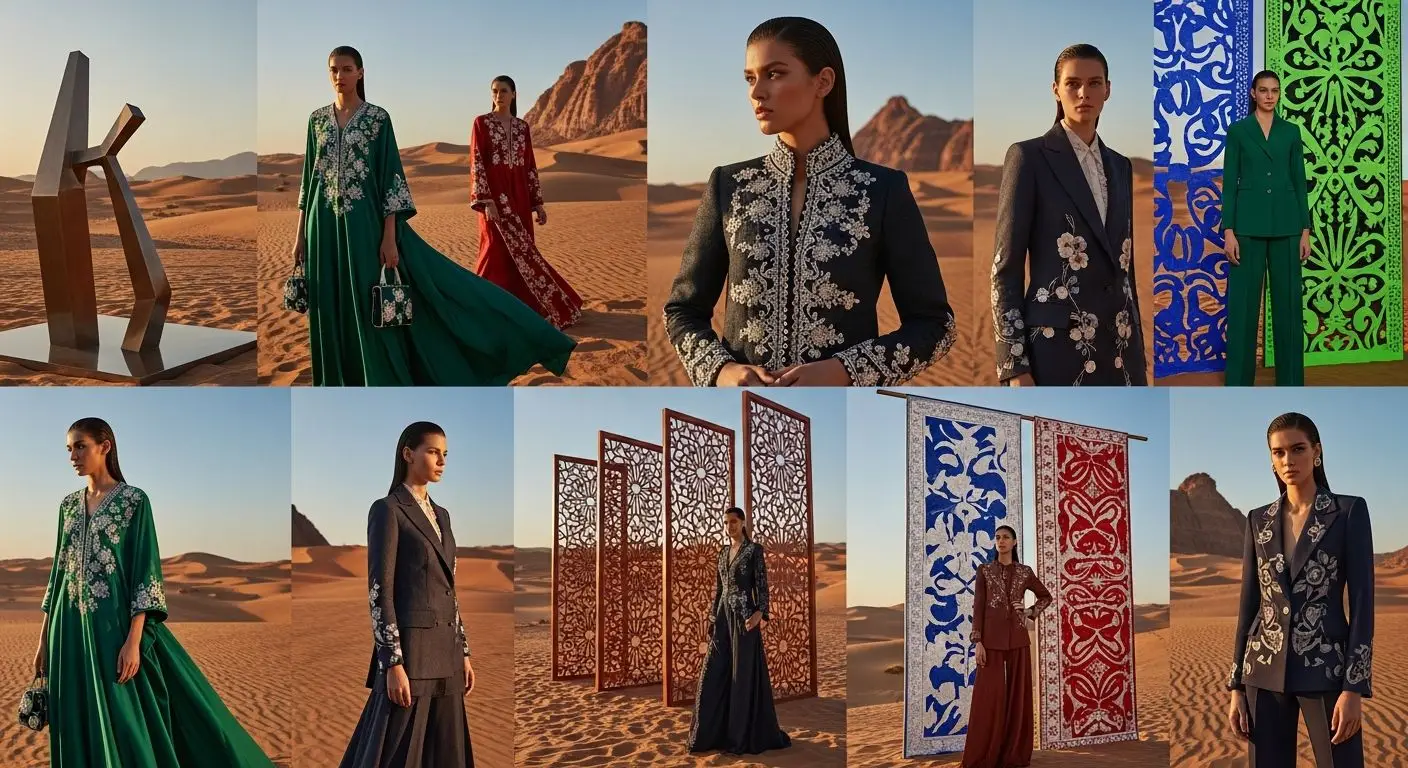
The industry has officially retired the term “unisex,” replacing it with a rigorous, identity-expressive approach to tailoring. This is “Seductive Professionalism”—a deconstruction of the binary led by the likes of **Alessandro Michele** at Valentino and **Peter Do**.
Michele’s debut collection, *Avant Les Débuts*, serves as a manifesto for this “unisex couture,” utilizing Elizabethan ruffles and deep-cut navy blazers to transcend traditional labels. Meanwhile, Peter Do is pioneering **”Adjustable Precision,”** using modular tailoring and internal corsetry to allow garments to be sculpted to any form, regardless of biological sex.
This isn’t just a social statement; it is an economic powerhouse. With the global gender-neutral market projected to reach **$8.7 billion by 2035**, luxury houses are pivoting to co-ed runways as a standard, recognizing that the modern consumer views menswear and womenswear labels as mere suggestions.
### III. Refined Clarity: Technical Provocateurs and Gorpcore Styling
As climate volatility and economic anxiety heighten, the rugged aesthetic of outdoor gear has matured into **”Refined Clarity.”** This is the era of **Emotional Utility**, where clothing provides a sense of security in a chaotic world.
We are seeing a sophisticated evolution of **Gorpcore styling**, where the “urban ninja” aesthetic is swapped for high-concept technicality. Leading the charge is South Korean label **Post Archive Faction (PAF)** and the technical provocateurs at **Heliot Emil**, who blend industrial hardware with anatomical precision. Innovation has turned surgical: ultrasonic welding and laser cutting have replaced traditional stitching, creating a “Sonic Finish” that is both waterproof and weightless.
The palette has shifted to **”Tech Neutrals”**—Slate Blue, Juniper, and the forecasted **”Cloud Dancer”** off-white. This is the “One-Closet Rule” in action: multi-functional garments that serve the commute, the boardroom, and the digital realm simultaneously.
### IV. Bio-Absolution: Regenerative Haute Couture
In the rarefied world of Haute Couture, the focus has shifted from “sustainability”—now considered too passive—to **Regenerative Luxury**. The modern High-Net-Worth Individual (HNWI) is seeking **”Bio-Absolution”** through garments that actively improve the environment.
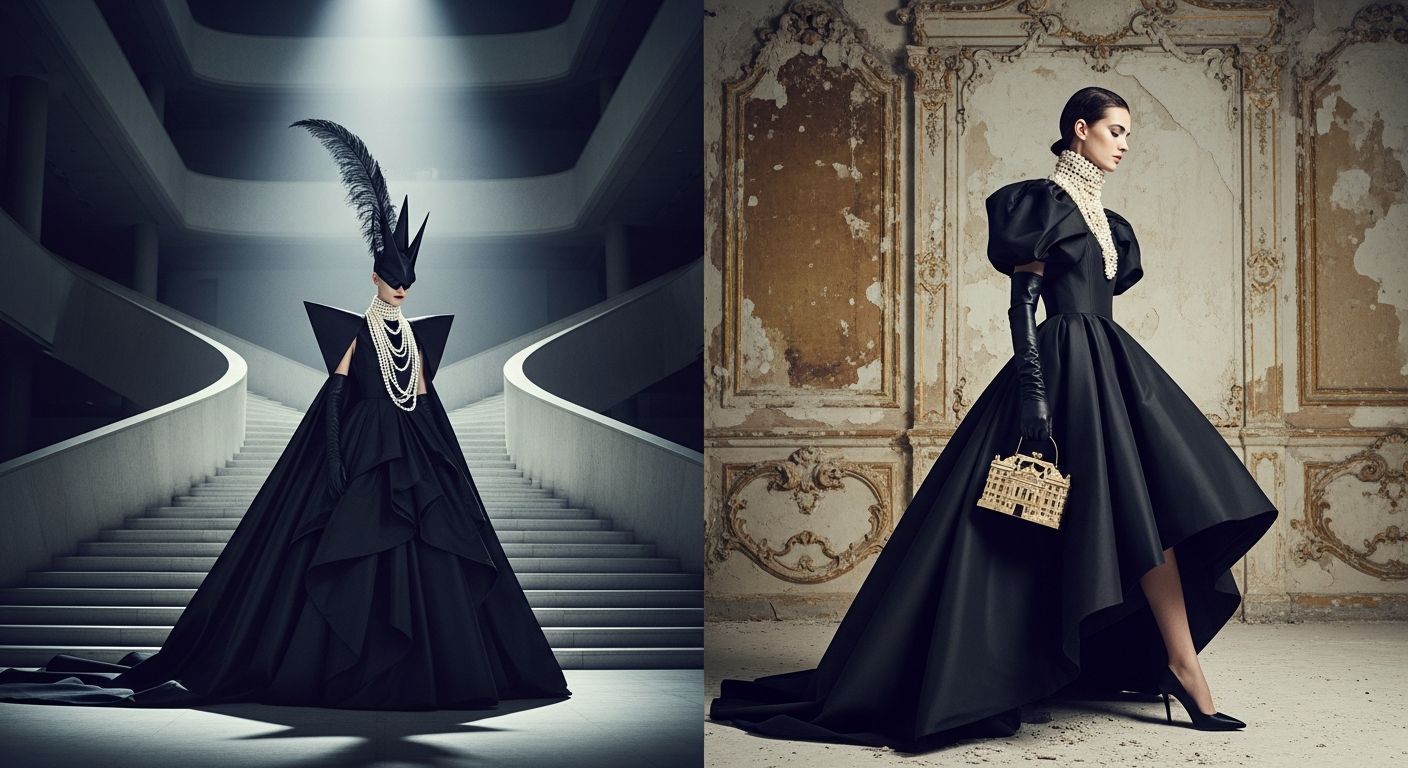
**Iris van Herpen’s** AW 2025-6 “Sympoiesis” collection redefined the “living look,” featuring garments cultivated from 125 million bioluminescent algae. Similarly, [Stella McCartney](https://www.stellamccartney.com) continues to bridge the gap between Silicon Valley biotech and high-end craftsmanship, introducing air-purifying denim treatments and “FEVVERS”—a plant-based alternative to ostrich plumes. When a garment is fermented rather than sewn, it becomes the ultimate luxury signal of the 21st century.
### V. Post-Hype Rebellion: The New Minimalism
Perhaps the most surprising shift is the rise of **”Epistemological Resistance.”** In a world dominated by the algorithm, staying “normal” has become the ultimate subversion. Status is no longer derived from a visible logo but from a garment’s **GSM (grams per square meter)** and fiber origin.
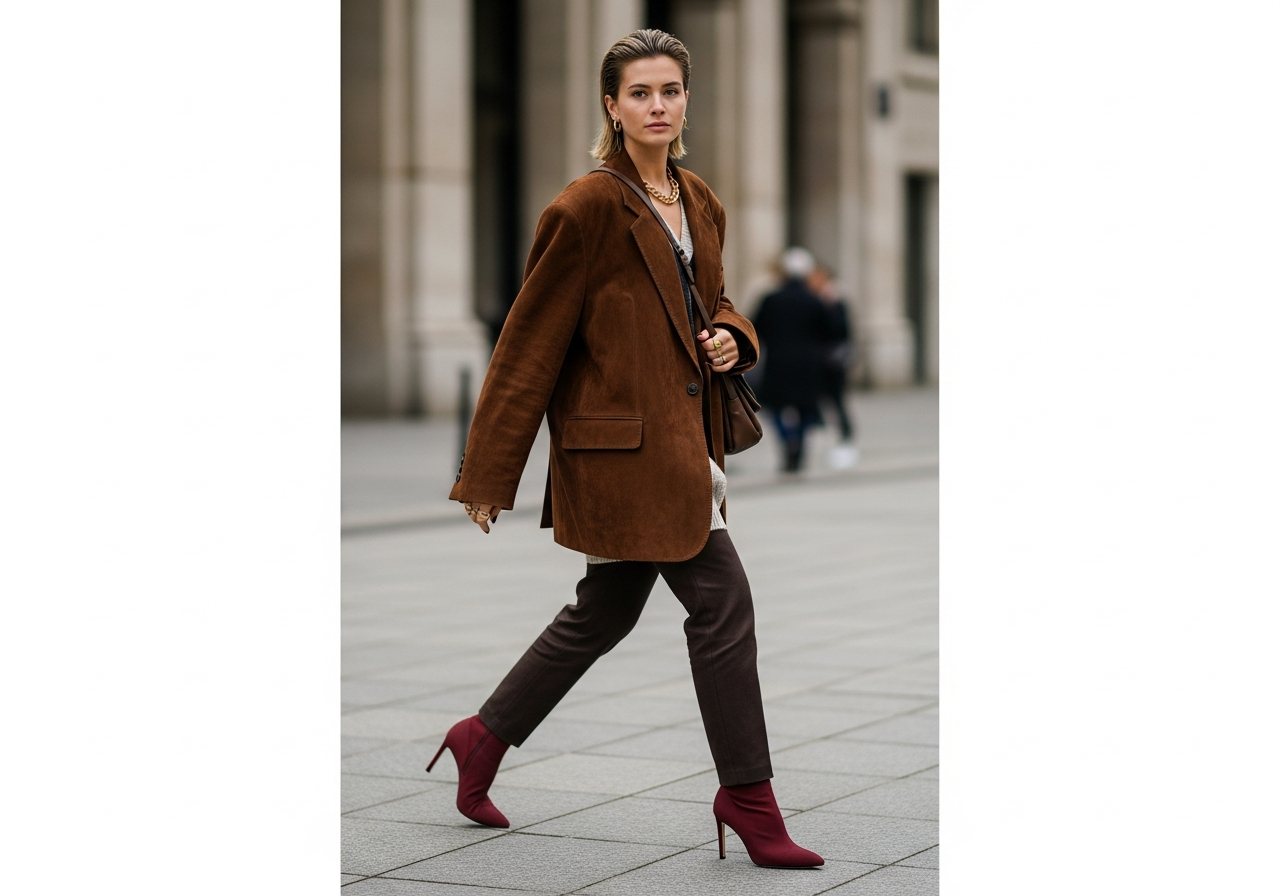
Central to this movement is the curation of a **quiet luxury capsule**. This minimalist aesthetic trend emphasizes “stealth wealth” through impeccable construction and understated elegance. By investing in a core set of high-quality, logo-less essentials, the modern consumer rebels against “hype” culture, favoring longevity and tactile excellence over viral visibility.
The new guard, including **Mowalola** and **Corteiz**, is bypassing traditional retail through guerilla marketing, signaling an era where knowledge of construction and fabric provenance is the highest form of currency.
### VI. The Spatial Sartorialist: Digital Identity
Finally, we must acknowledge the decoupling of fashion from its physical form. As we enter the era of **Spatial Sartorialism**, the “Digital Twin” has become as essential as the physical garment. Over 70% of Gen Z consumers now prioritize their digital avatar’s wardrobe for social media and gaming ecosystems like Roblox or Fortnite.
This “Post-Physical” identity allows for a level of experimentation impossible in the material world, bridging the gap between the runway and the metaverse instantly through AR filters and “See Now, Wear Digitally” models.
—
### The Editorial Verdict: The Collapsed Timeline
To dress in 2025–2026 is to participate in a **”collapsed timeline.”** The modern silhouette is a layered system: a moisture-wicking technical silk base, a “found” 1990s Margiela knit mid-layer, and a bio-polymer structural shell. It is clinical yet visceral, archival yet futuristic.
—
### Shop the Edit
* **The Technical Shell:** [Heliot Emil Liquid Metal Jacket]
* **The Archive Grail:** [1996 McQueen ‘Dante’ Reissue]
* **The Quiet Luxury Essential:** [Stella McCartney S-Wave Tailored Blazer]
* **The Gorpcore Staple:** [PAF 5.0 Technical Trouser]
### Related Reading
* [The Rise of Bio-Fabrication: Is Fermented Silk the Future?](#)
* [How to Source Authentic 90s Margiela Without the Markup](#)
* [Gender-Fluidity on the Runway: A Decade in Review](#)